
Lead Paint Removal Townsville
Safe preparation and repainting of pre-1970 Townsville homes, done to the Australian standard.
Townsville has thousands of homes built before 1970, and most of them still carry layers of lead-based paint under whatever has been applied since. Walk the streets of Hermit Park, Railway Estate, Mysterton, North Ward, Pimlico or West End and nearly every Queenslander and post-war timber home fits that description. Sanding or scraping those surfaces without controls releases lead dust into the yard, the house and the neighbourhood, and children and pets are the first to be affected.
DHPainting prepares and repaints older Townsville homes using lead-safe practices in line with AS 4361.2, the Australian standard for managing lead paint on residential buildings. We test before we start, contain the work area, use methods that keep dust down, and dispose of waste correctly. It is slower than a standard repaint and it costs more, but it is the only responsible way to work on these houses.
With over 15 years in Townsville, much of it on exactly this kind of home, our team knows where lead paint is likely to be hiding, from original window sashes and verandah balustrades to the enamel on old kitchen cupboards.
Lead paint and the Townsville house
Lead was used in Australian house paint in high concentrations until the late 1960s and in lower amounts until the 1990s. In Townsville the problem is made worse by the climate. Decades of UV and wet seasons leave old oil-based paint chalky and flaking, and that chalk is easily spread by rain, hosing and wind into garden beds and under-house areas where children play. Soil near drip lines of old timber homes often carries elevated lead levels for this reason.
Older timber homes also tend to have been repainted many times, so a modern coating may be sitting over several lead-bearing layers. Any preparation that goes through the top coats, including pressure washing at high pressure, dry sanding and heat gun stripping, can release that lead. Our methods are chosen to keep the paint wet, contained and collected.
- Swab testing of suspect surfaces before work begins
- Ground sheets, screens and sealed areas to contain chips and dust
- Wet scraping and wet sanding rather than dry abrasion
- HEPA vacuum collection of dust and debris each day
- No open-flame burning off and no uncontrolled high-pressure blasting
- Collected waste bagged and disposed of as required for lead paint
Where we deal with lead paint
- Queenslander and post-war weatherboard exteriors
- Window sashes, frames and sills
- Verandah posts, balustrades and fretwork
- External doors, screens and door frames
- Internal VJ walls and tongue-and-groove ceilings
- Skirtings, architraves and picture rails
- Original kitchen and bathroom joinery
- Steel gates, fences and roofing trims
- Garages, sheds and under-house areas
- Rental properties and pre-sale repaints of older homes
How a lead-safe repaint works
Our approach follows AS 4361.2 from the first test to the final clean, and we explain each stage in your quote so there are no surprises.
- Step 1
Testing and assessment
We swab test suspect surfaces during the quote inspection and note the condition of each one. Intact, well-bonded lead paint and flaking lead paint call for different approaches.
- Step 2
Method and quote
Your itemised quote sets out which surfaces will be stripped, which will be stabilised and encapsulated, and how the site will be contained and cleaned.
- Step 3
Containment
The work area is isolated with ground sheets and screens. Gardens, pathways and under-house areas are covered, and the family is advised which areas to keep clear of while work is underway.
- Step 4
Wet preparation
Loose paint is removed by wet scraping and wet sanding so dust is never airborne. Chips and slurry are collected as we go and the area is HEPA vacuumed at the end of every day.
- Step 5
Priming and encapsulation
Sound lead paint that is left in place is sealed under a primer and full coating system that locks it away. Bare timber exposed by stripping is primed before the new finish coats.
- Step 6
Clean down, disposal and sign-off
All sheeting, filters and waste are bagged and disposed of correctly, the site is washed down, and you sign off on the completed job with our 10-year workmanship warranty.
Recent lead paint removal work in Townsville
Every project below was completed by our Townsville team. Each page shows the photos and the signed client review from the job.
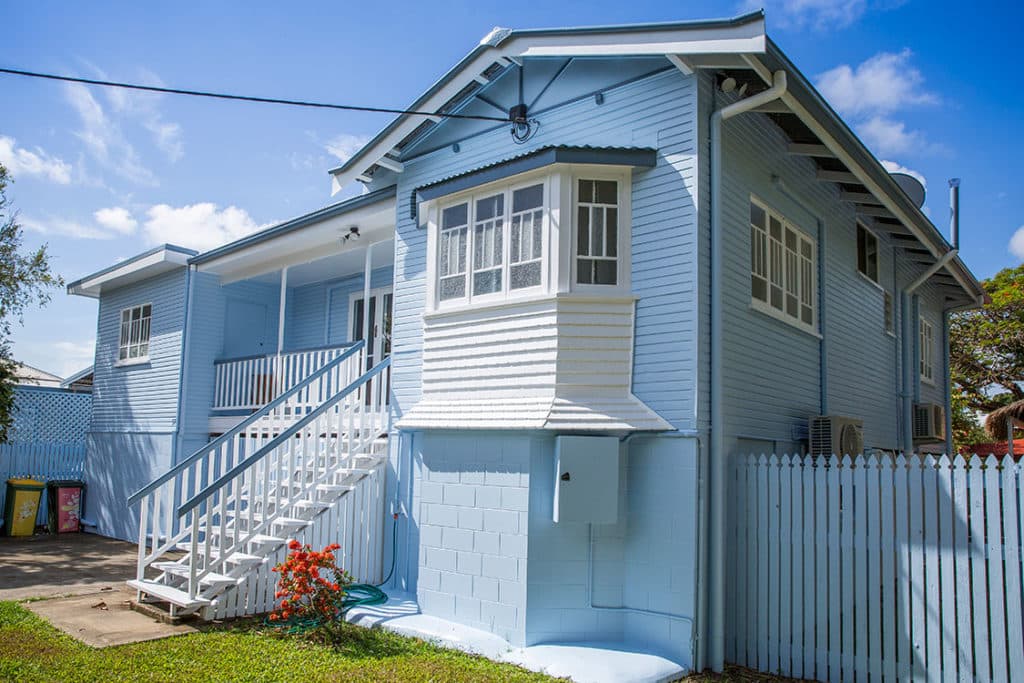
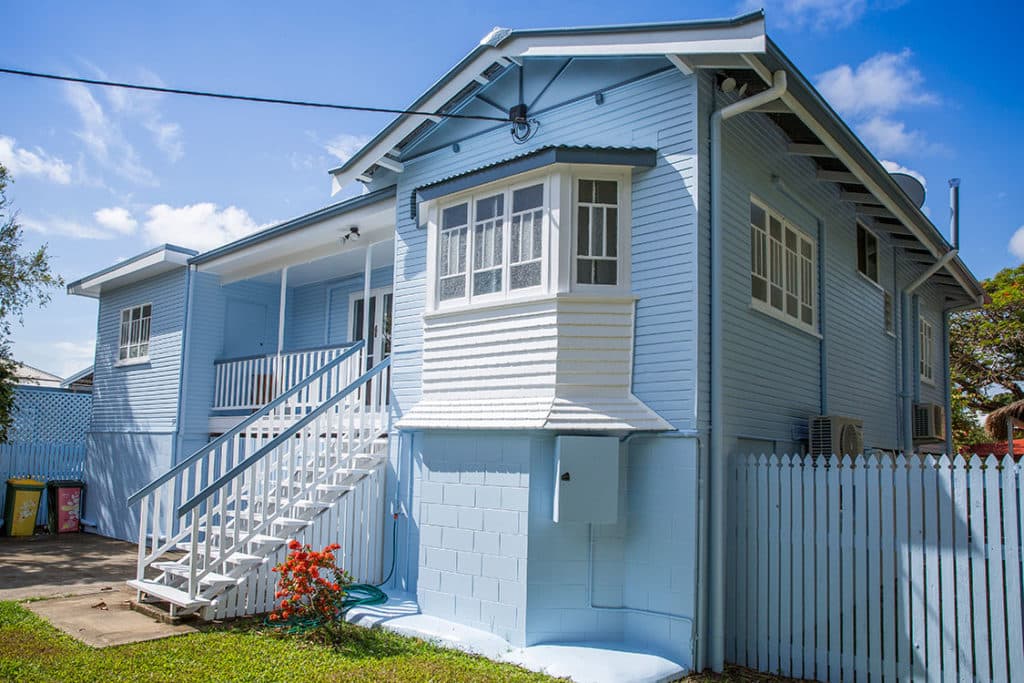
Hughes Street, Hermit Park
Exterior repaint of an older Hermit Park home, the type of timber house where lead-safe preparation methods are standard practice for our team.
View the project →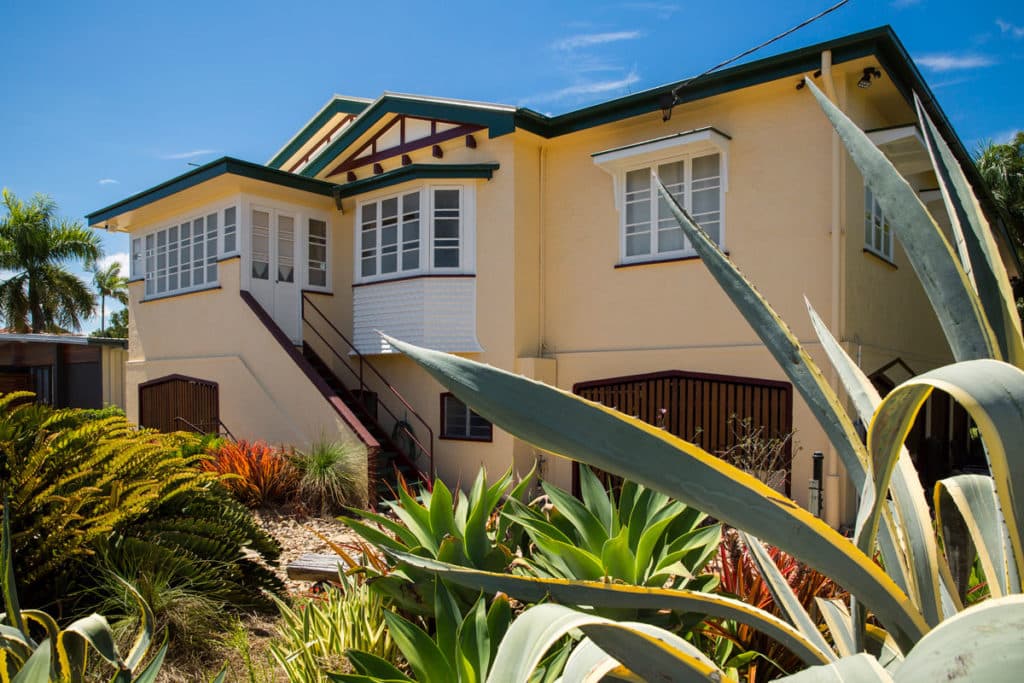
Fulham Road, Pimlico
Exterior repaint of an established Pimlico home in one of the suburbs where pre-1970 paint layers are common and careful preparation matters.
View the project →Get a detailed quote for your Townsville property
A trained estimator visits your property, checks the condition of every surface and gives you an itemised, obligation-free quote. Our quotes explain the preparation, the coating system and the warranty, so you know exactly what you are paying for.
Prefer to talk it through? Call the Townsville office on (07) 3395 7930.
Where we deliver this service
Our painters are based at the West End office and work across Townsville and North Queensland, including Hermit Park, Railway Estate, Mysterton, North Ward, Pimlico, West End, South Townsville, Belgian Gardens, Hyde Park, Gulliver, Currajong, Rosslea and Oonoonba. If your suburb is not listed, call us. We travel for the right project.
Lead Paint Removal Townsville: common questions
How do I know if my Townsville home has lead paint?
If the house was built before 1970 it almost certainly does, and homes painted up to the 1990s may too. We swab test suspect surfaces during the quote visit. A laboratory test is available if you want a definitive result for a specific surface.
Does all the lead paint have to be removed?
No. AS 4361.2 allows lead paint that is sound and well bonded to be stabilised and encapsulated under a new coating system. Removal is for surfaces where the paint is flaking, chalking or on friction points like window sashes. We recommend the mix that is safe and cost effective for your home.
Is it safe to stay in the house while you work?
For exterior work, usually yes, with the work area kept clear and windows closed on that side of the house. For extensive interior stripping we may recommend moving out of the affected rooms for the duration. We discuss this with you before work starts.
Why does a lead-safe repaint cost more than a normal one?
Containment, wet methods, daily HEPA cleaning and proper waste disposal all add time and materials. The extra cost buys a repaint that does not leave lead in your soil, your gutters or your children's play areas.
Can you pressure wash an old Queenslander before painting?
Only at controlled pressure and with the run-off managed. High-pressure blasting strips lead paint into a slurry that ends up in the garden and the stormwater system. We use gentler washing and collect what comes off.
What happens to the removed paint?
Chips, slurry, sheeting and used filters are bagged on site and disposed of as lead-contaminated waste. Nothing is left in your bins or hosed into the gutter.